Heating costs in Zurich can be a significant expense during winter. As a tenant, you may not control the building’s heating system, but there are many practical steps you can take to reduce energy consumption and stay warm without expensive modifications.
Key Takeaways
- Proper radiator use and thermostat settings can reduce heating costs by 10-20%.
- Sealing windows and doors with insulation strips is a cheap and effective improvement.
- Ventilating correctly (short bursts, not tilted windows) prevents mold and saves energy.
- Thermal curtains and draft stoppers are low-cost, no-permission-needed upgrades.
- Report heating problems to your landlord promptly – they are responsible for the system.
Optimize Your Radiator Use
- Do not block radiators with furniture or curtains – heat needs to circulate.
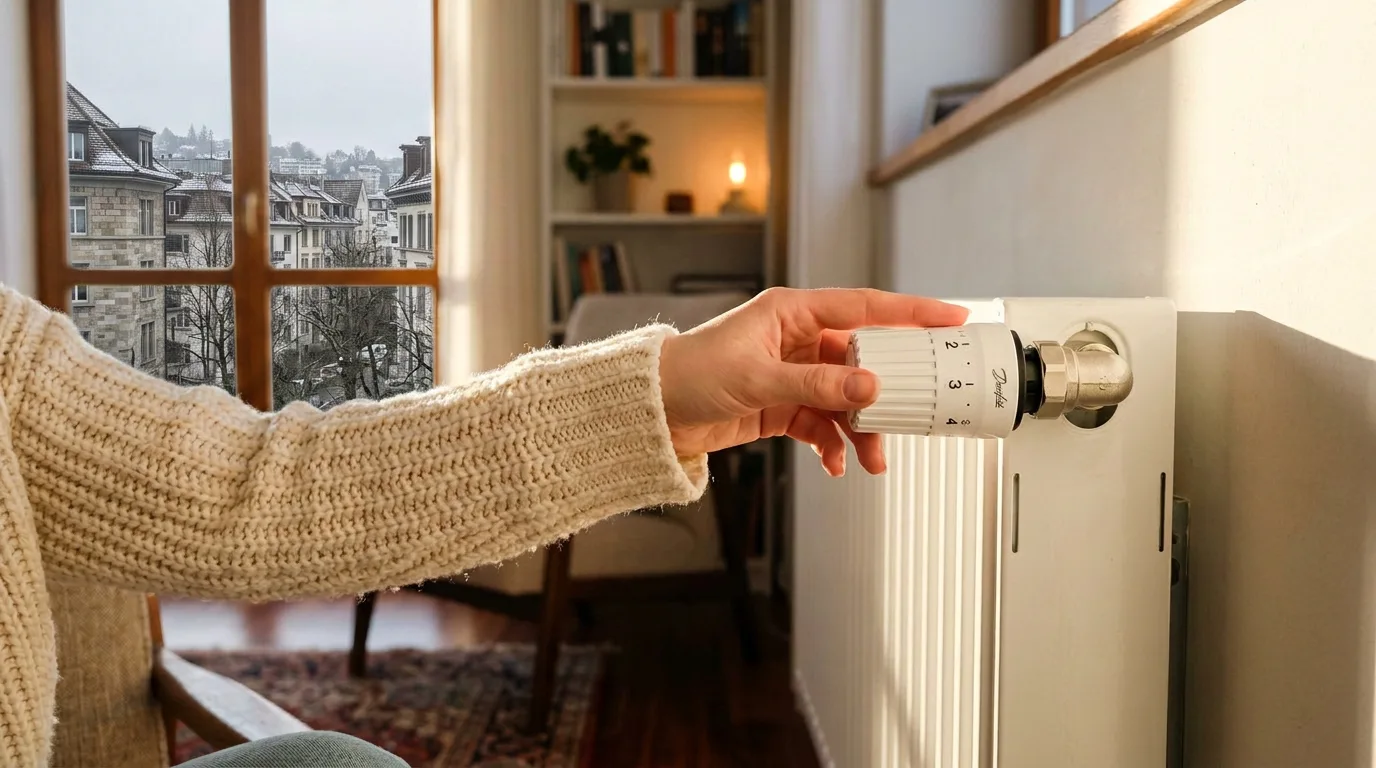
- Set thermostats to 20-21C in living rooms, 18C in bedrooms.
- Turn down radiators when you leave the apartment, but never fully off (risk of frozen pipes).
- Bleed radiators at the start of winter if they have cold spots at the top.
Seal Drafts and Insulate
- Apply self-adhesive insulation strips to windows and doors (available at any hardware store for CHF 5-15).
- Use draft stoppers at the bottom of doors.
- Place reflective radiator foil behind wall-mounted radiators to direct heat into the room.
- Install thermal curtains for additional insulation – especially effective for older single-pane windows.
Ventilate Correctly
Many tenants in Switzerland make the mistake of leaving windows tilted for hours. This wastes enormous amounts of energy and can cause mold around the window frame.
The correct method is Stossluften (burst ventilation): open windows fully for 5-10 minutes, 2-3 times per day. This exchanges the air quickly without cooling down the walls.
When to Contact Your Landlord
- Heating is not working or rooms stay below 20C despite being turned on.
- Radiators make unusual noises (banging, gurgling).
- Windows or doors have significant gaps causing drafts.
- Mold is appearing around windows or in bathrooms.
Under Swiss tenancy law, your landlord is responsible for maintaining the heating system and ensuring livable temperatures.
Energy-Saving Upgrades for Tenants
| Upgrade | Cost (CHF) | Permission Needed? |
|---|---|---|
| Window insulation strips | 5 – 15 | No |
| Draft stoppers | 10 – 25 | No |
| Thermal curtains | 40 – 100 | No |
| Radiator reflector foil | 15 – 30 | No |
| Smart thermostat | 50 – 200 | Usually yes |
Professional Help with Heating Issues
If you need help with heating adjustments, radiator bleeding, or insulation work, professionals on MyProfessional.ch can assist in Zurich, Zug, and Sankt Gallen.
Frequently Asked Questions
What temperature should I set my apartment heating to?
The recommended temperature is 20-21C for living rooms and 18C for bedrooms. Each degree lower saves approximately 6% on heating costs.
How do I ventilate correctly in winter in Switzerland?
Use Stossluften (burst ventilation): open windows fully for 5-10 minutes, 2-3 times per day. Do not leave windows tilted for extended periods as this wastes energy and can cause mold.
Can I install a smart thermostat in my rental apartment?
Smart thermostats usually require landlord approval since they connect to the building’s heating system. Some plug-in smart radiator valves can be used without permission.
What should I do if my heating is not working properly?
Contact your landlord or building management immediately. Under Swiss law, they are responsible for maintaining the heating system. Document the issue with photos and temperature readings.
How much can I save on heating costs with simple insulation?
Simple measures like window insulation strips, draft stoppers, and thermal curtains can reduce heating costs by 10-20%. The total investment is typically under CHF 100 and requires no landlord permission.